Features
The Bridges of Shimanami
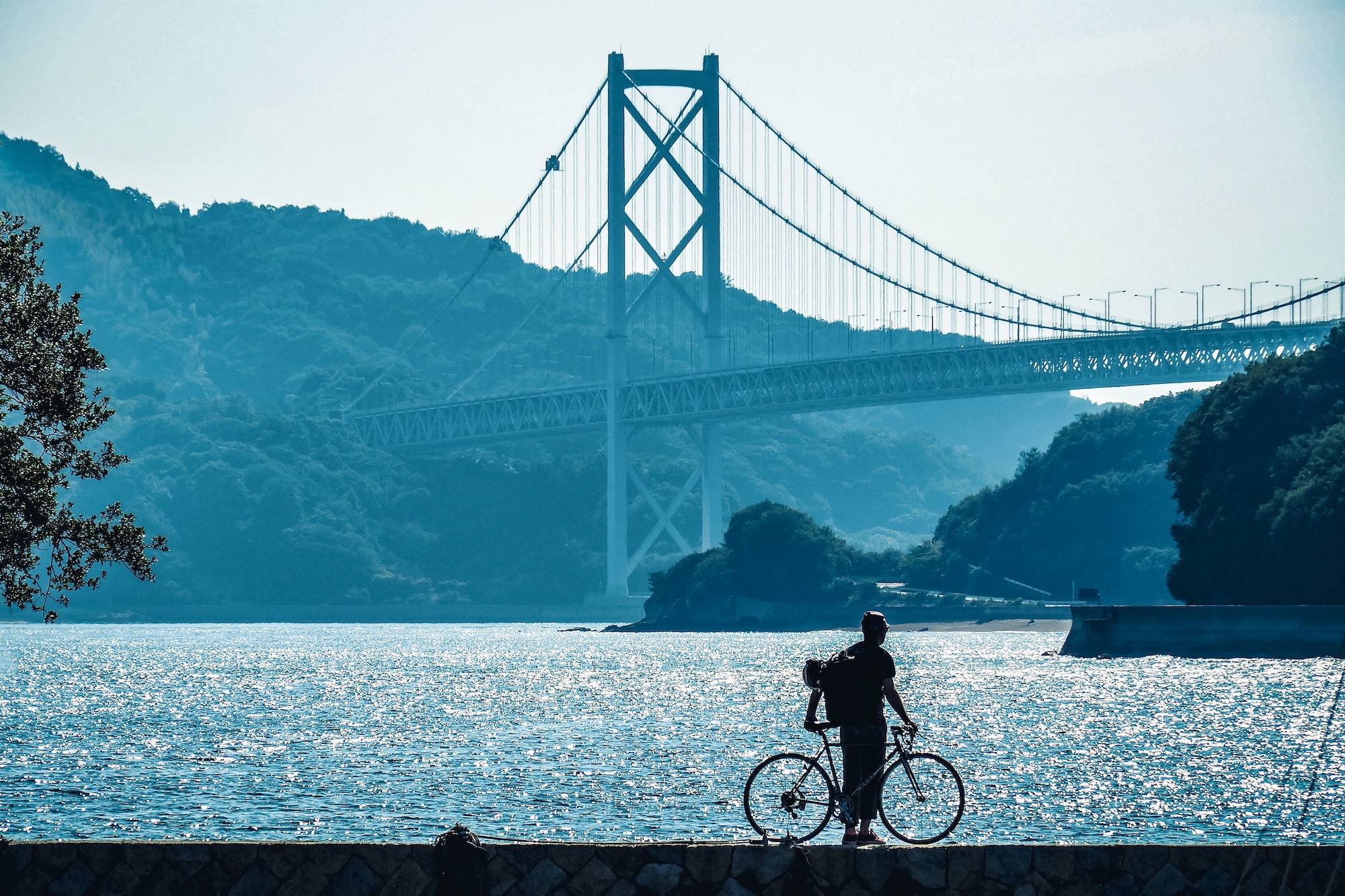
A guide to the iconic bridges that provide the backbone of the Shimanami Kaido.
Completed in 1999 as part of the Honshu–Shikoku Bridge Project, the Shimanami Kaido is now widely recognized as one of the most impressive cycle routes, not only in Japan, but worldwide.
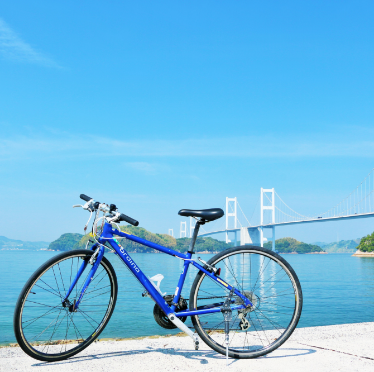
The comprehensive rental bike service provided by Shimanami Japan allows people of all abilities to simply show up with comfortable clothing and a sense of adventure and enjoy the route, a factor that has undoubtedly helped the Shimanami Kaido achieve its status.
However, it is arguably the bridges, carrying visitors from island to island, that have made the route so iconic.
Riders travel from island to island along dedicated cycling paths, climbing gentle approach ramps to cross some of Japan’s most impressive modern bridges. In total, seven major bridges form the backbone of the route, each with its own design, engineering story, and unforgettable views.
From elegant cable-stayed structures to dramatic suspension bridges spanning fast-moving tidal straits, the bridges of the Shimanami Kaido are as much a highlight of the journey as the islands themselves.
Here is a closer look at the bridges that make the Shimanami Kaido possible.

The Retro “Moving Bridges” of Onomichi
Technically, we should be kicking off our look at the bridges of the Shimanami Kaido with the Shin-Onomichi Bridge, which links Onomichi on mainland Japan with the island of Mukaishima.
However, the cable-stayed bridge that crosses the 550m-wide Onomichi Strait is only one of the Shimanami Kaido’s bridges that doesn’t have a designated cycle path. So, for safety reasons, it is strongly recommended that cyclists take a short ferry ride between Onomichi and Mukaishima, which has become a charming and safe start to the adventure.
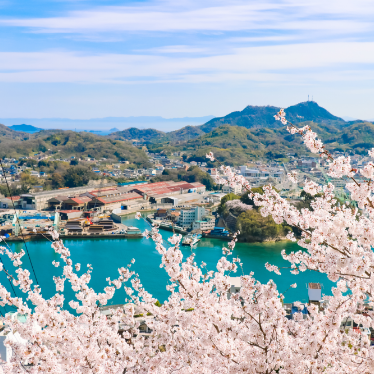
To the east, you can see both the Shin-Onomichi Bridge and the older Onomichi Bridge standing side by side above the strait. The view highlights how modern infrastructure blends with Onomichi’s historic port town atmosphere.
Once on Mukaishima Island, cyclists quickly settle into the rhythm of island riding: quiet coastal roads, small fishing ports, and glimpses of the bridges that await farther along the route.
Bonus Bridge #1: Mukaishima Bridge
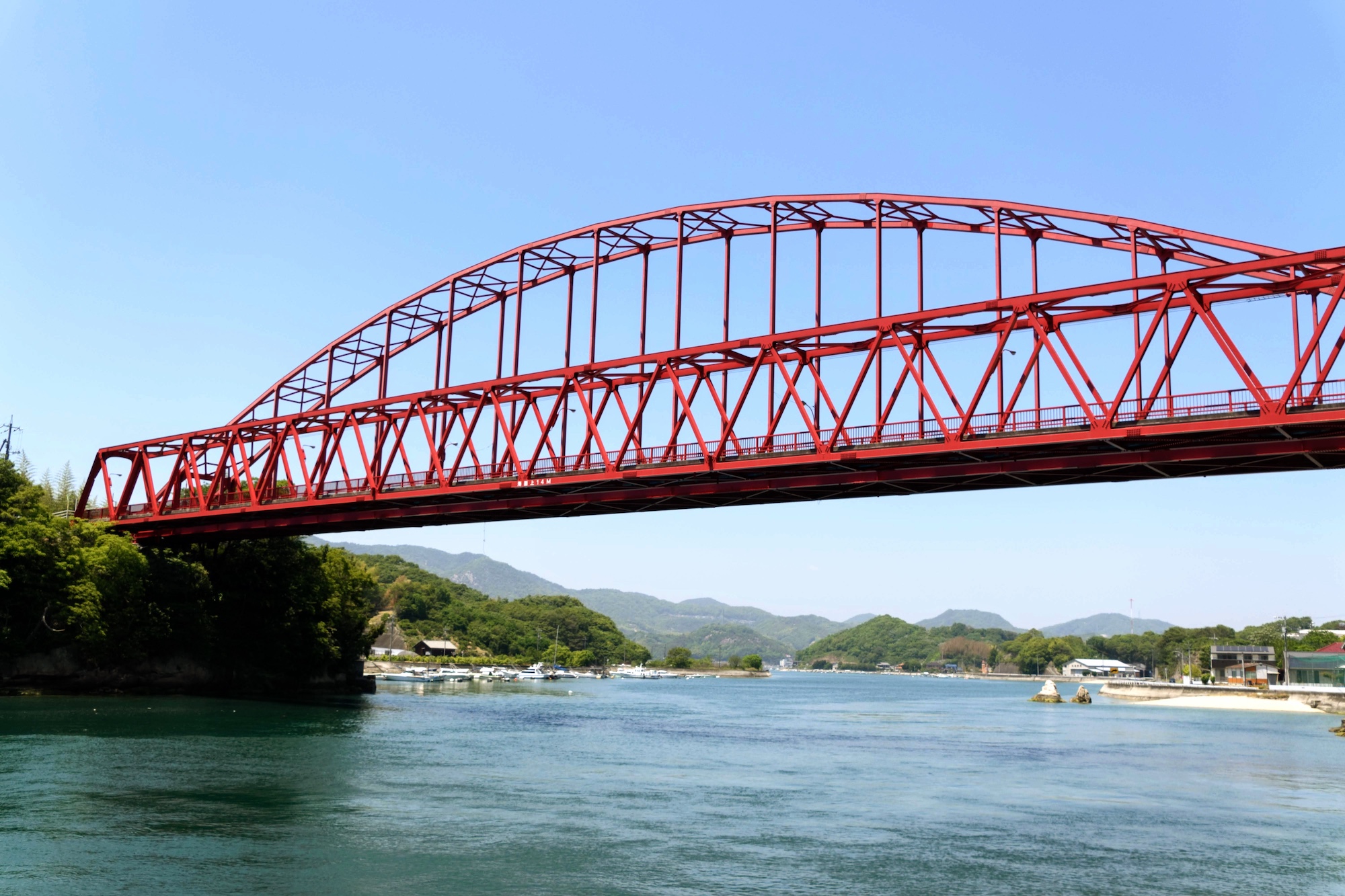
As you cycle along the west coast of Mukaishima, you pass under a red arched bridge. This is the 140m Mukaishima Bridge, which connects Mukaishima with the smaller island of Iwashijima, home to citrus groves and green onion fields. A highlight is Itsukushima Shrine, which stands on a white sand beach, and has its own “floating” shrine gate, reminiscent of its famous namesake on Miyajima.
Built in 1968, the Mukaishima Bridge is considered Japan’s first sea-crossing agricultural bridge, constructed to improve transportation for local farmers and fishermen.
Innoshima Bridge
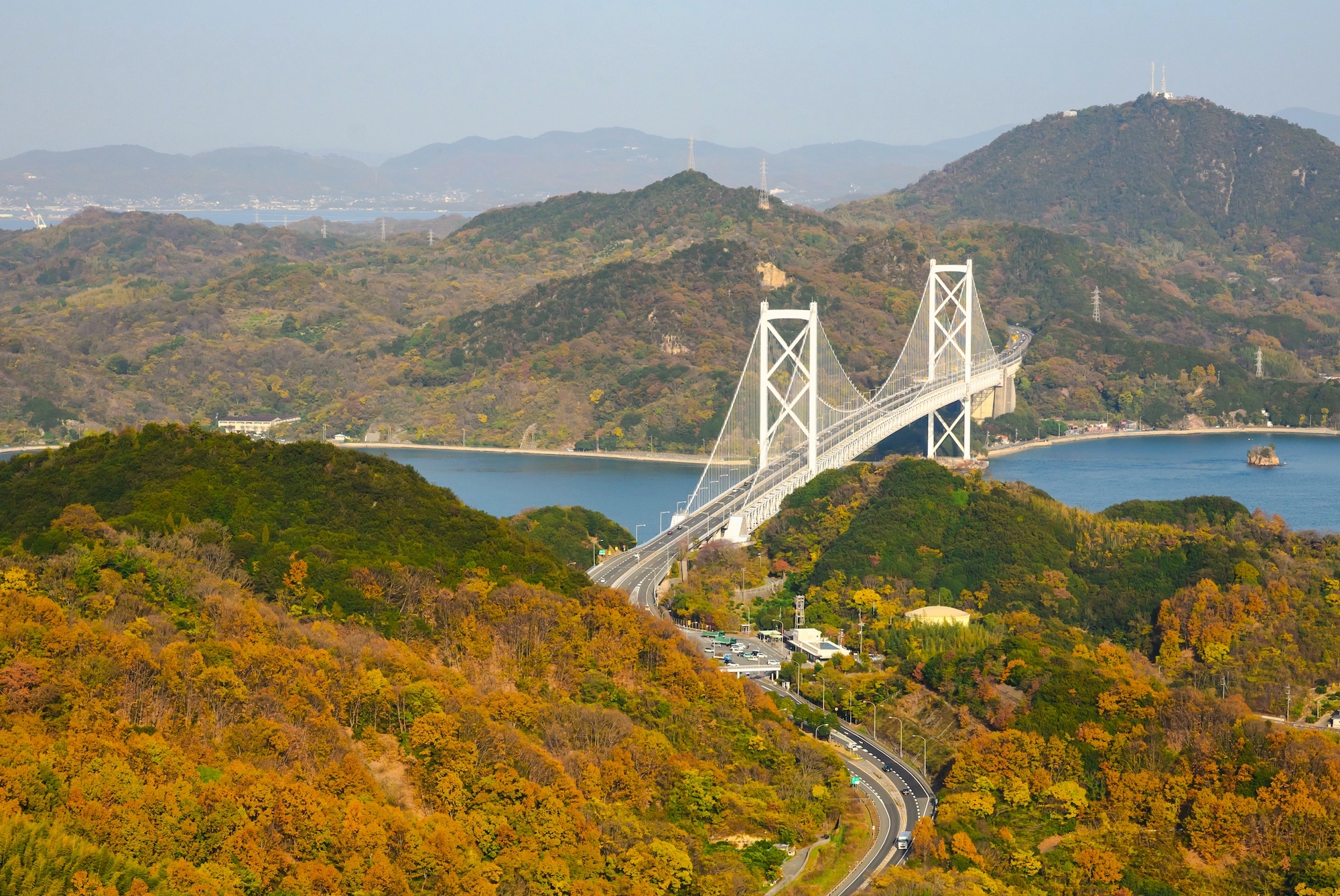
The first major bridge cyclists encounter when riding the route from Onomichi is the Innoshima Bridge, connecting Mukaishima Island and Innoshima Island. Opened in 1983, it stretches 1,270 meters across the water and was one of the earliest of the ambitious bridges constructed as part of the Honshu–Shikoku connection project.
Unlike most suspension bridges, Innoshima Bridge features a distinctive two-level structure. Cars travel on the upper deck, while cyclists and pedestrians use a protected pathway beneath the roadway, passing through the bridge’s steel framework.
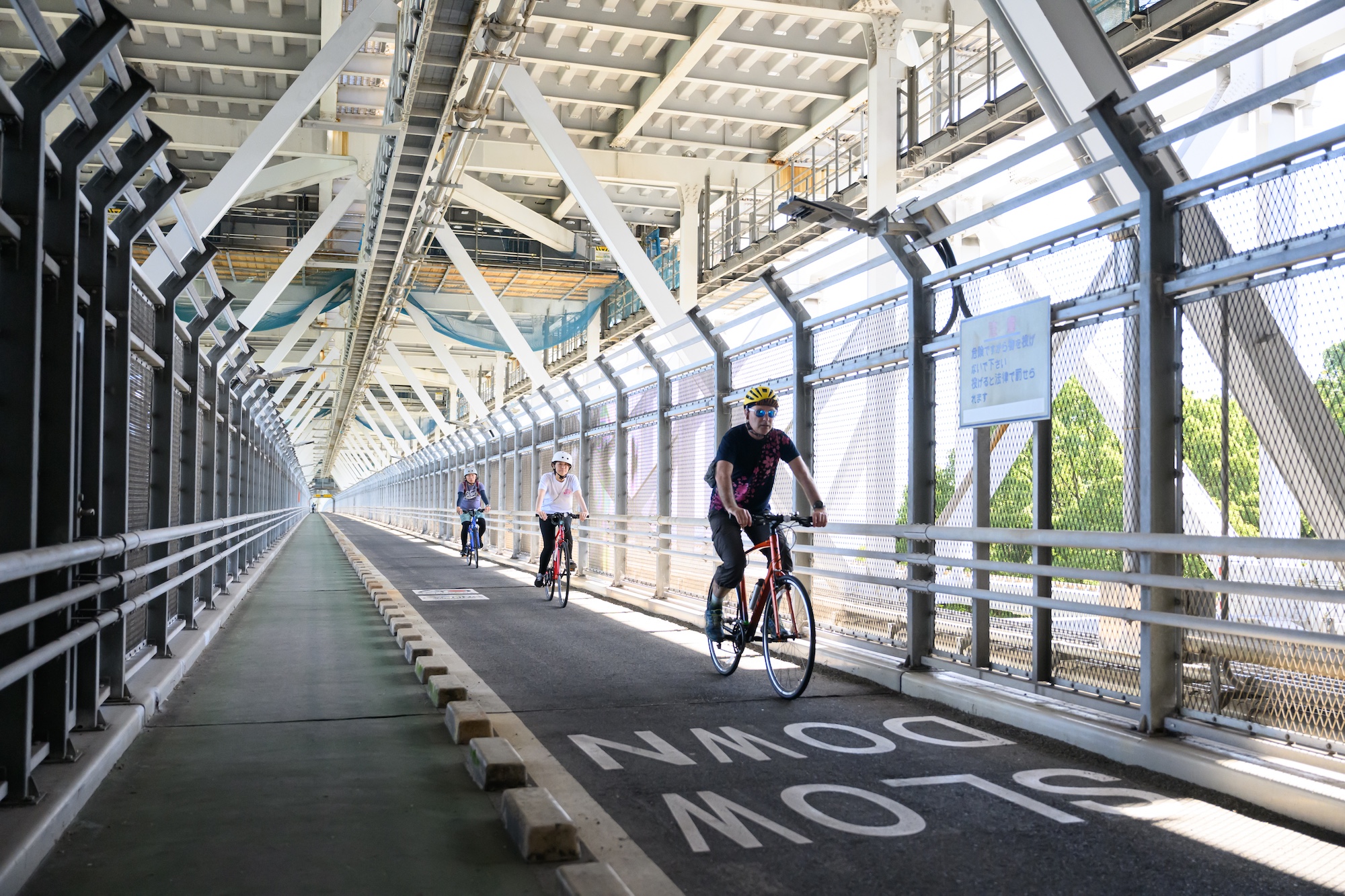
Riding through the enclosed passageway offers a unique perspective. The rhythmic pattern of steel beams frames glimpses of the sea, while the wind and sound of waves echo softly around the structure. For many first-time riders, this crossing is the moment when the Shimanami Kaido begins to feel truly special.
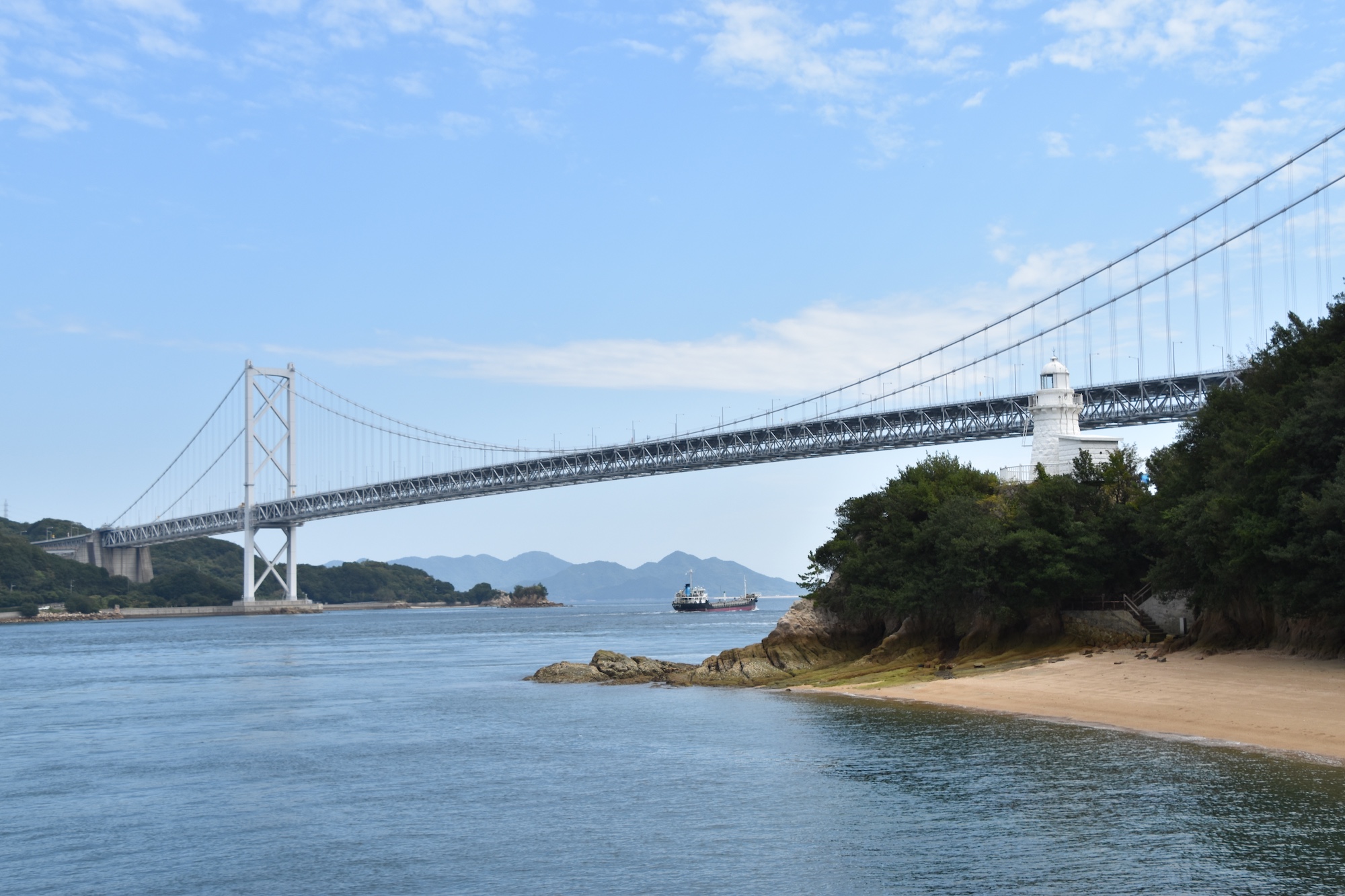
From the middle of the bridge, the view opens to the islands scattered across the Inland Sea, with green hills rising from calm blue water. Keep an eye out for the Ohama-saki lighthouse, which dates from 1877.
Ikuchi Bridge
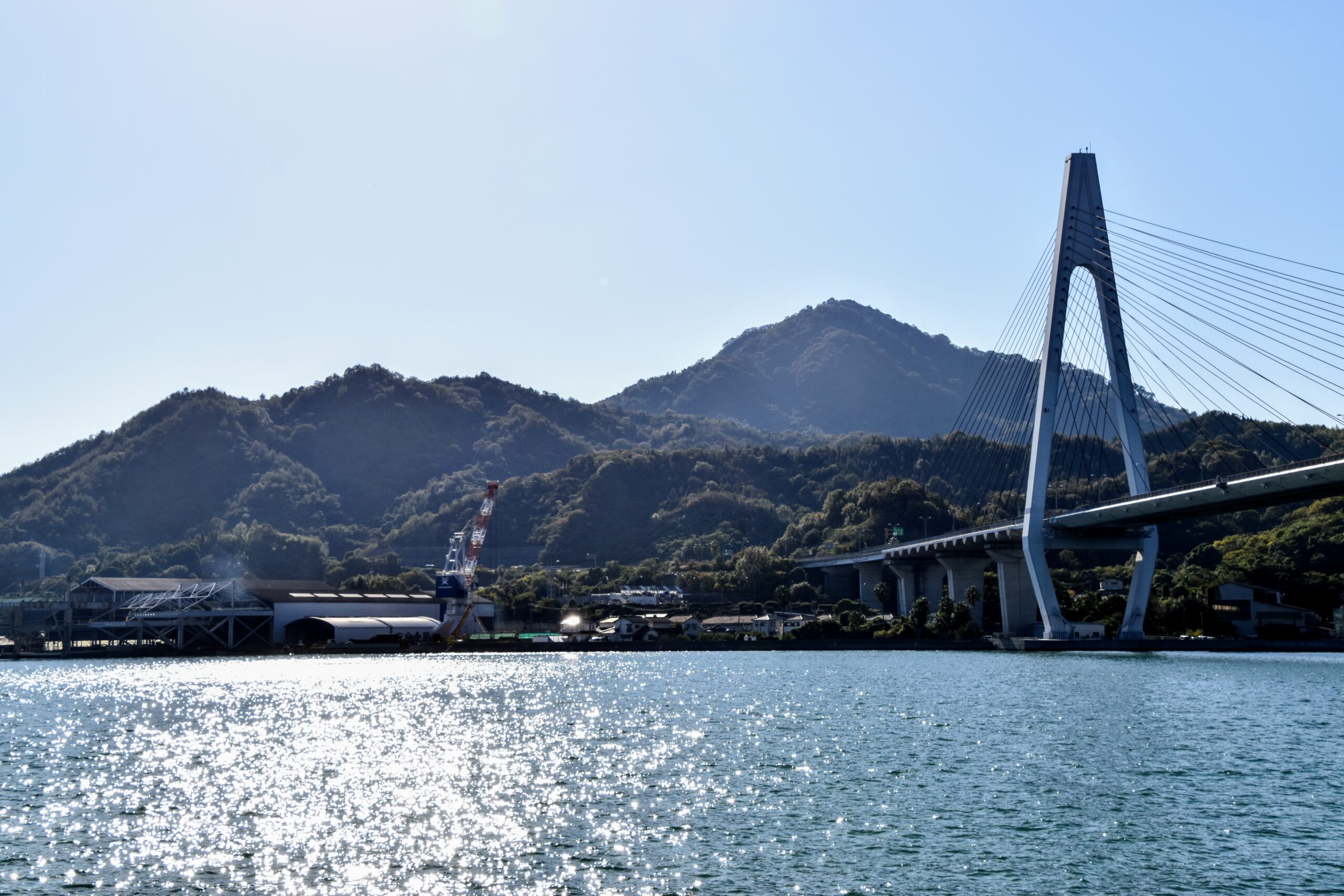
The next crossing leads from Innoshima to Ikuchijima, an island known for its lemon orchards and Mediterranean-like climate. This connection is made by the elegant Ikuchi Bridge, a cable-stayed bridge measuring about 790 meters in length.
Completed in 1991, Ikuchi Bridge was an engineering milestone. At the time of its completion, it was the longest cable-stayed bridge in the world, demonstrating new construction techniques that would later be used in even larger structures.
Bonus Bridge #2: Koune Bridge
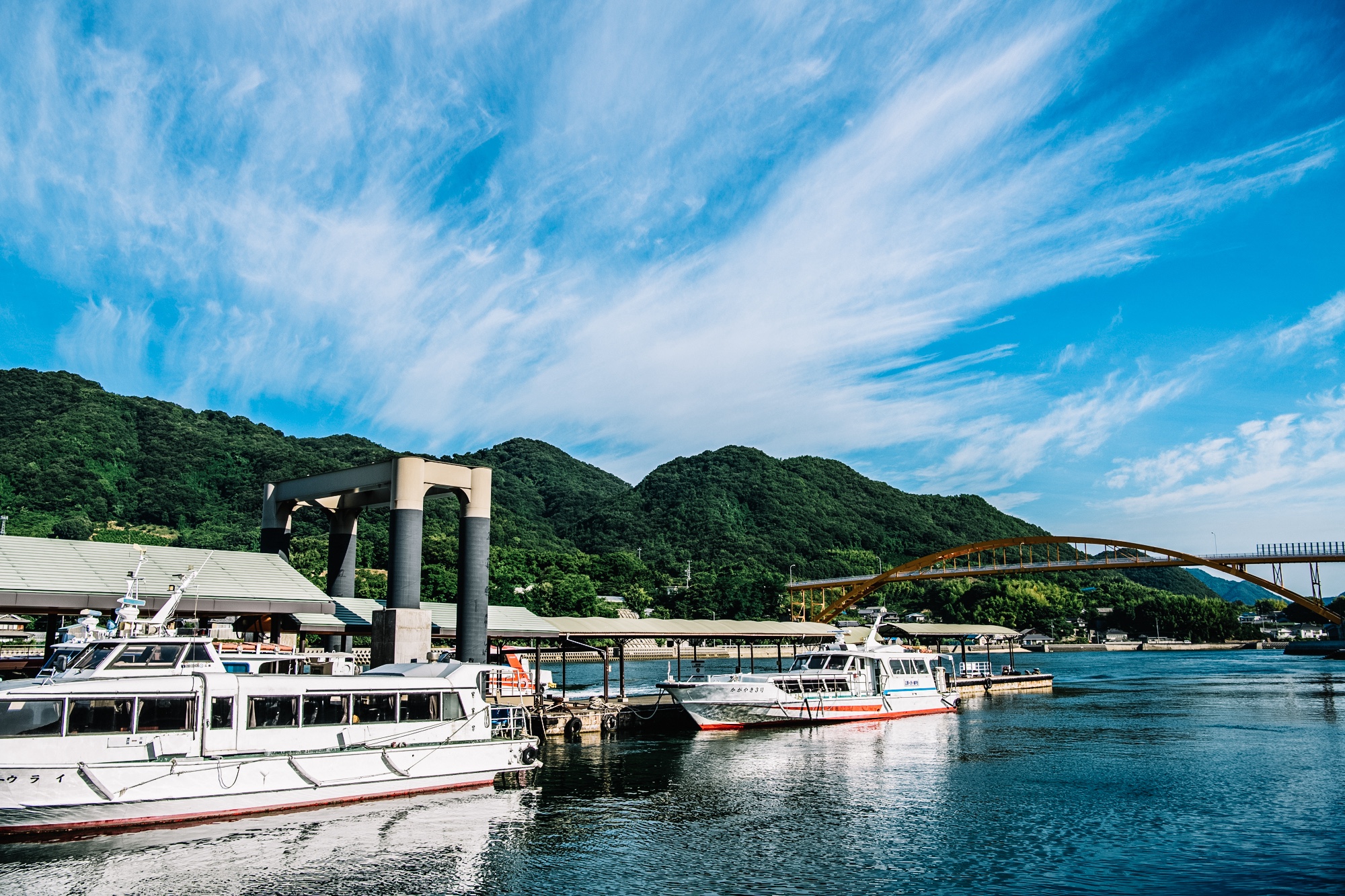
The distinctive yellow arched Koune Bridge, located near Setoda Port, which links Ikuchijima and Koune Island across the narrow Setoda Strait, dates from 1970.
The 205-meter through-type fixed-arch bridge was built, like the Mukaishima Bridge, to help citrus farmers transport their produce across the water. Indeed, its yellow color was chosen in reference to the island’s thriving citrus industry, and makes it especially striking against the blue water of the Seto Inland Sea.
For cyclists, crossing the bridge to Koune Island is an appealing side trip from Setoda. Here you can get a more intimate view of island life, fishing ports, and the orchard landscape that has long shaped this part of the Setouchi region.
Tatara Bridge
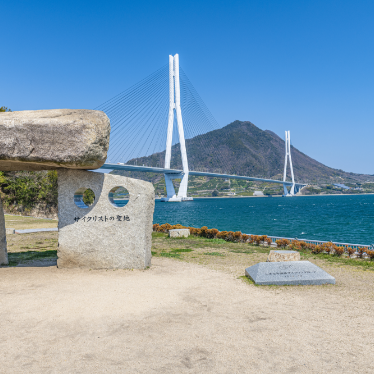
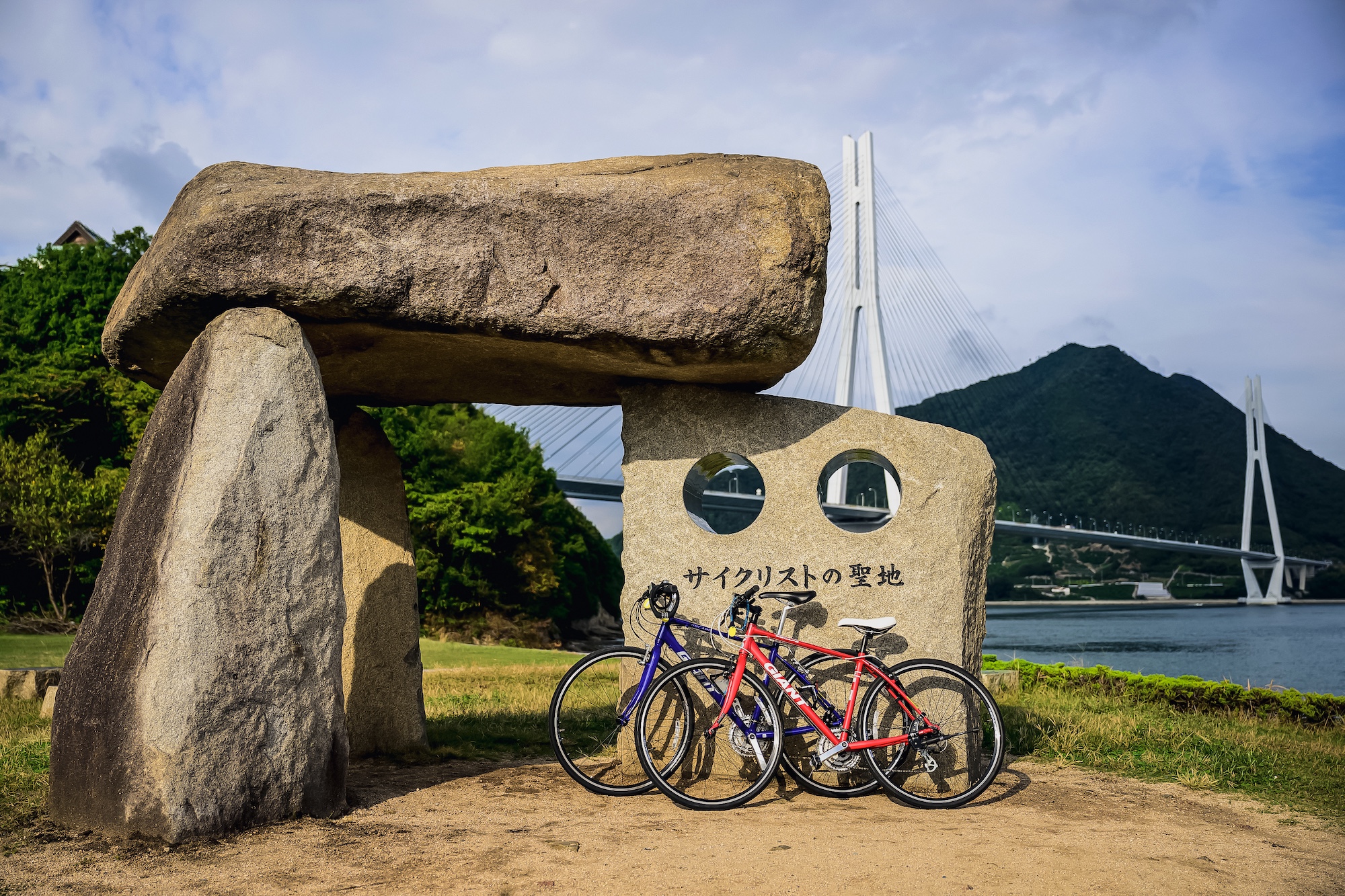
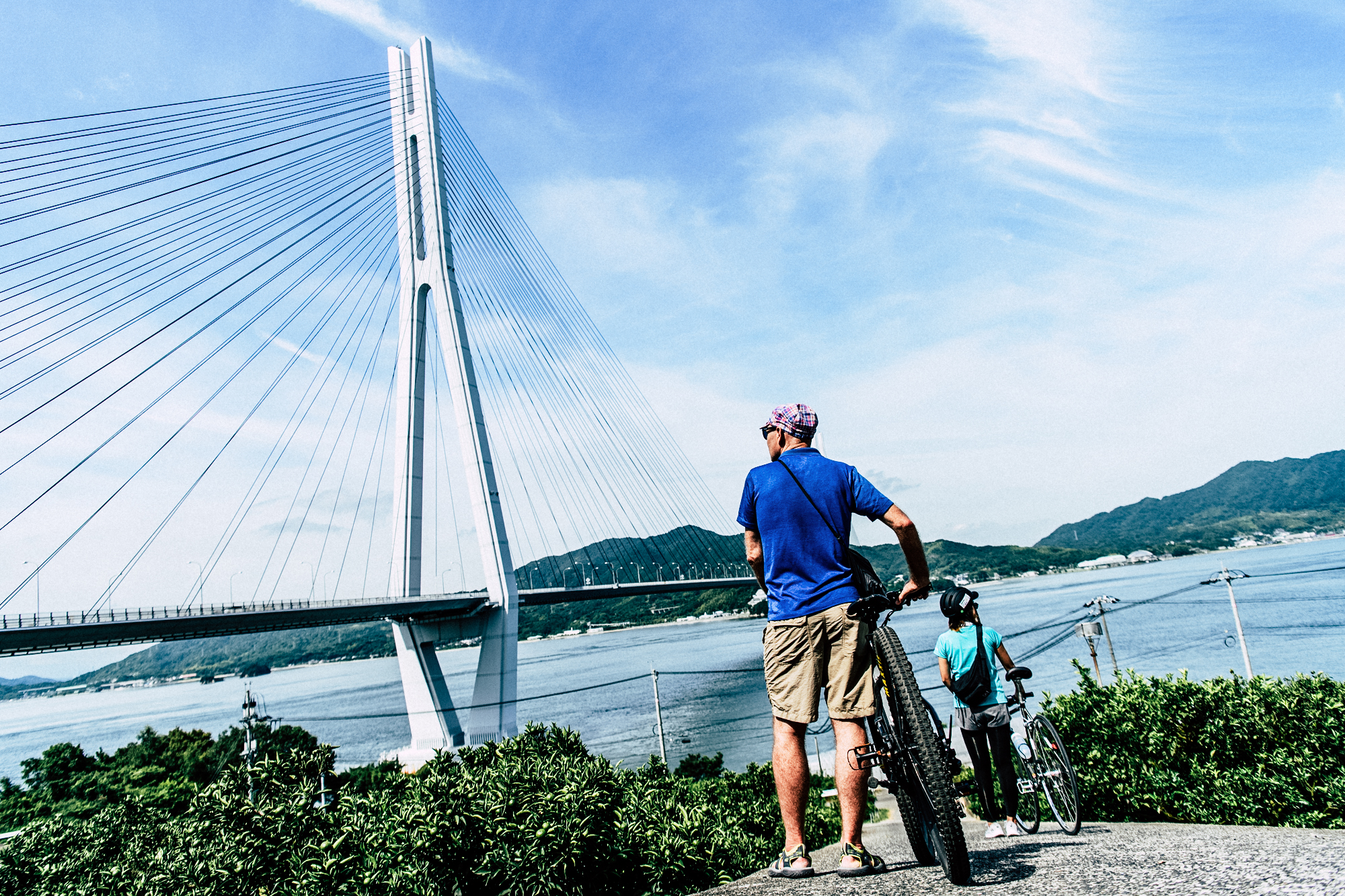
The Tatara Bridge is one of the Shimanami Kaido’s most iconic bridges. Connecting Ikuchijima and Omishima islands, the bridge spans 1,480 meters and is one of the largest cable-stayed bridges in the world.
When it opened in 1999, Tatara Bridge briefly held the title of the world’s longest cable-stayed bridge. Its massive towers, rising more than 200 meters above the sea, create one of the most recognizable landmarks along the Shimanami Kaido. Cycling across Tatara Bridge feels like floating above the sea, with panoramic views stretching to the horizon.
The bridge’s tall pylons and radiating cables create a striking silhouette against the sky. As cyclists ascend the gentle spiral approach ramps designed specifically for bicycles, they gain increasingly dramatic views over the surrounding islands.
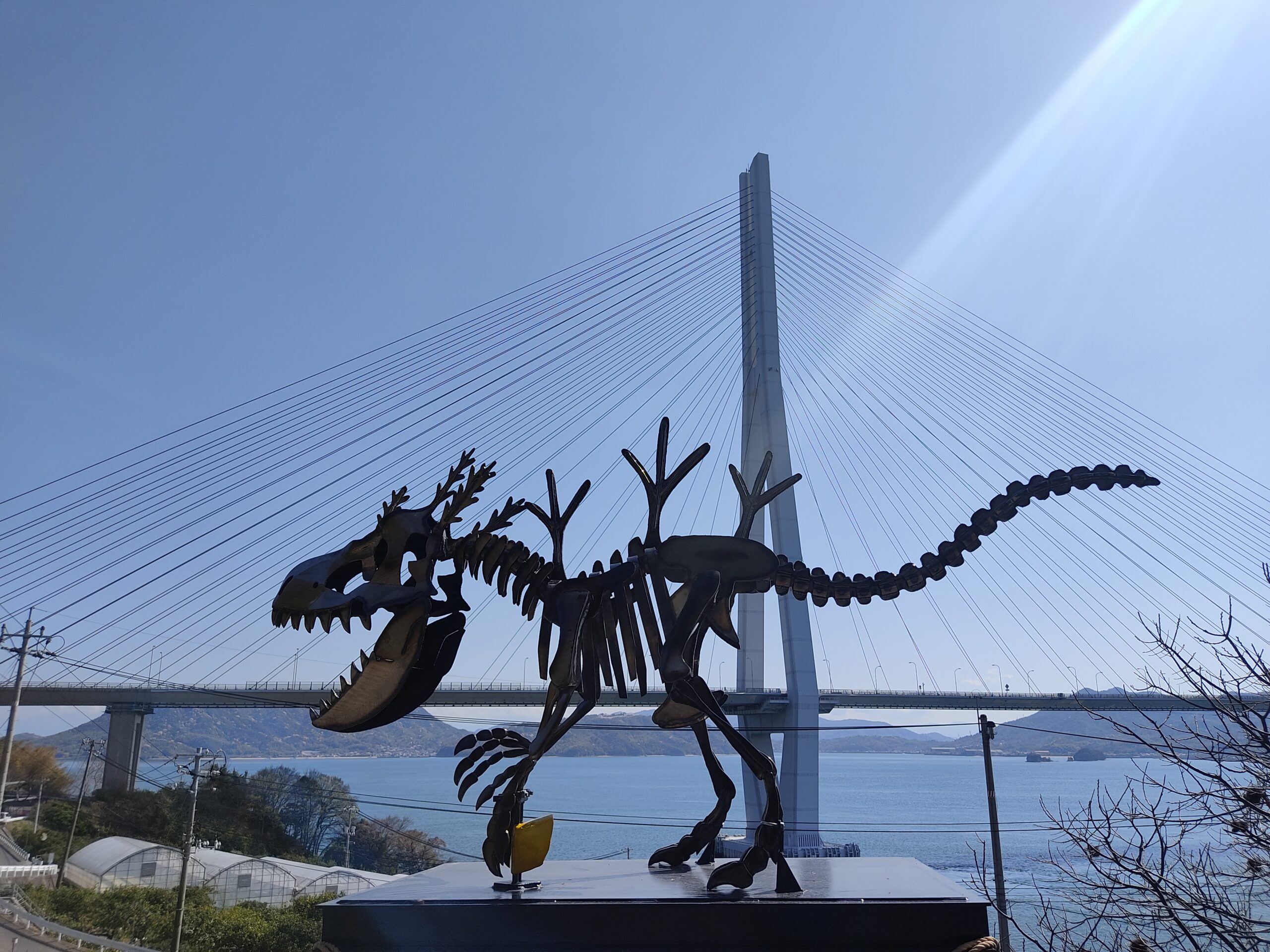
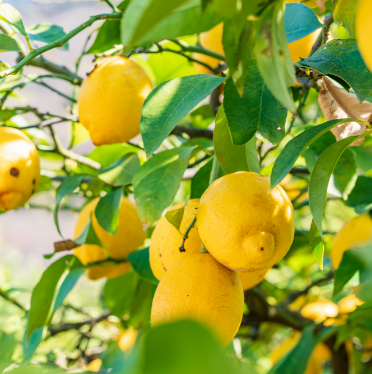
The approach ramp on the Ikuchijima Island side of the bridge curves through “Lemon Valley”, home to citrus groves which provide some of Japan’s most sought-after lemons. Look out for lemon-themed objets along the way, as well as a cafe, a lemon-themed Gatchapon machine on the side of the road, and even a wrought iron dinosaur grasping a lemon with it talons.
Here, you can enjoy the aroma of lemon blossoms in early summer, green fruit from summer to autumn, and ripe yellow lemons from winter to spring.
The bridge also marks an important geographic milestone. The center of the span forms the border between Hiroshima and Ehime prefectures, symbolizing the transition from Honshu to Shikoku. You may find local cyclists stopping here to take a commemorative shot of themselves straddling the two prefectures on either side of the border.
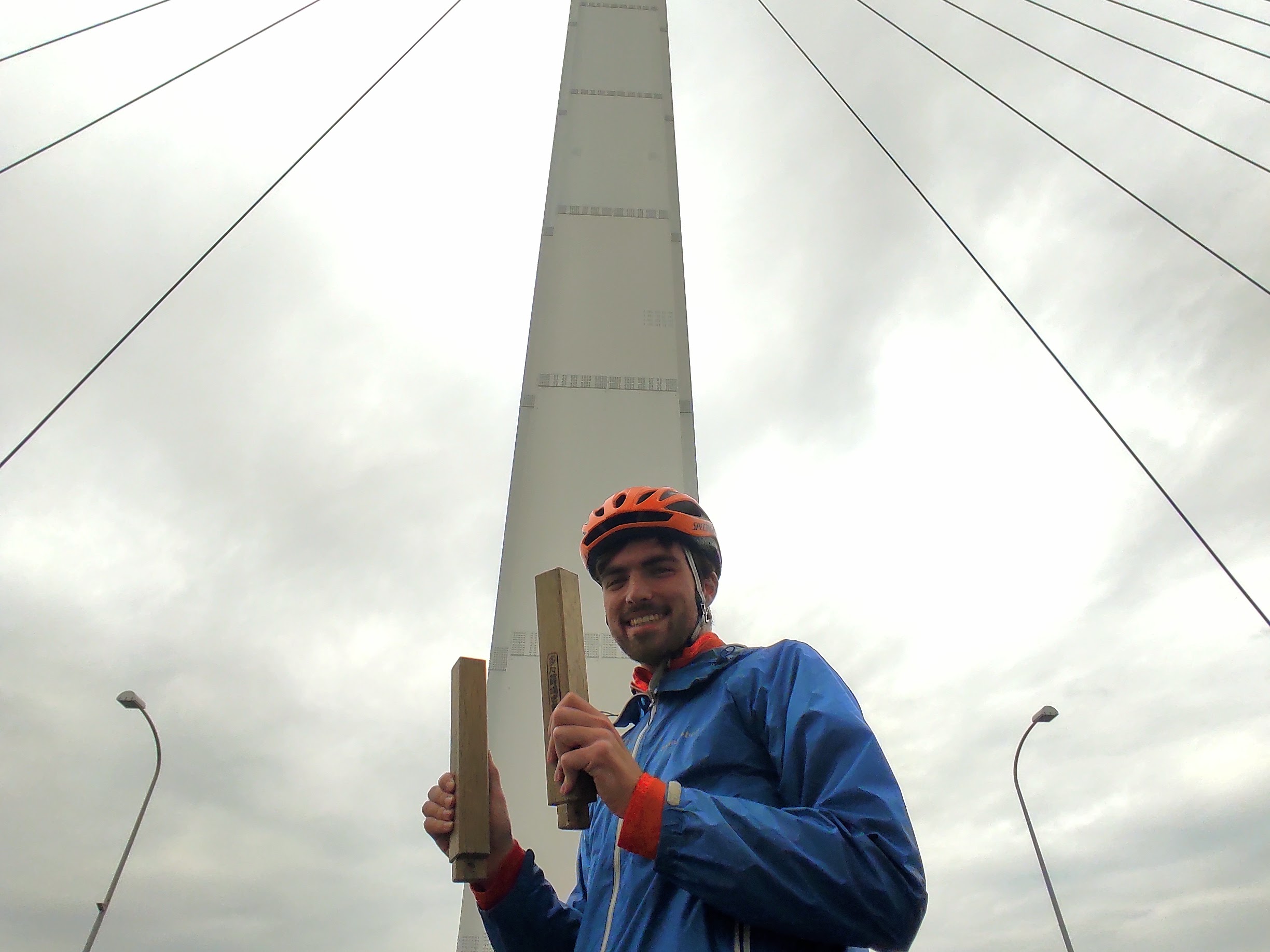
Other, lesser-known, fun, and interactive points of interest are located beneath each of the bridge’s towers. Here, you will notice a set of wooden clappers hung on the fence. Wait for a break in the motor traffic and hit the clappers together, standing directly below the towers. The towers cause an acoustic effect that produces a mysterious sound known as the “Dragon of Tatara’s Roar.” Give it a try, but be careful not to obstruct other cyclists as they pass.
Wait for a break in the motor traffic and hit the clappers together, standing directly below the towers. The towers cause an acoustic effect that produces a mysterious sound known as the “Dragon of Tatara’s Roar.” We highly recommend giving this a try. Just be careful not to obstruct other cyclists on the narrow path.
Omishima Bridge
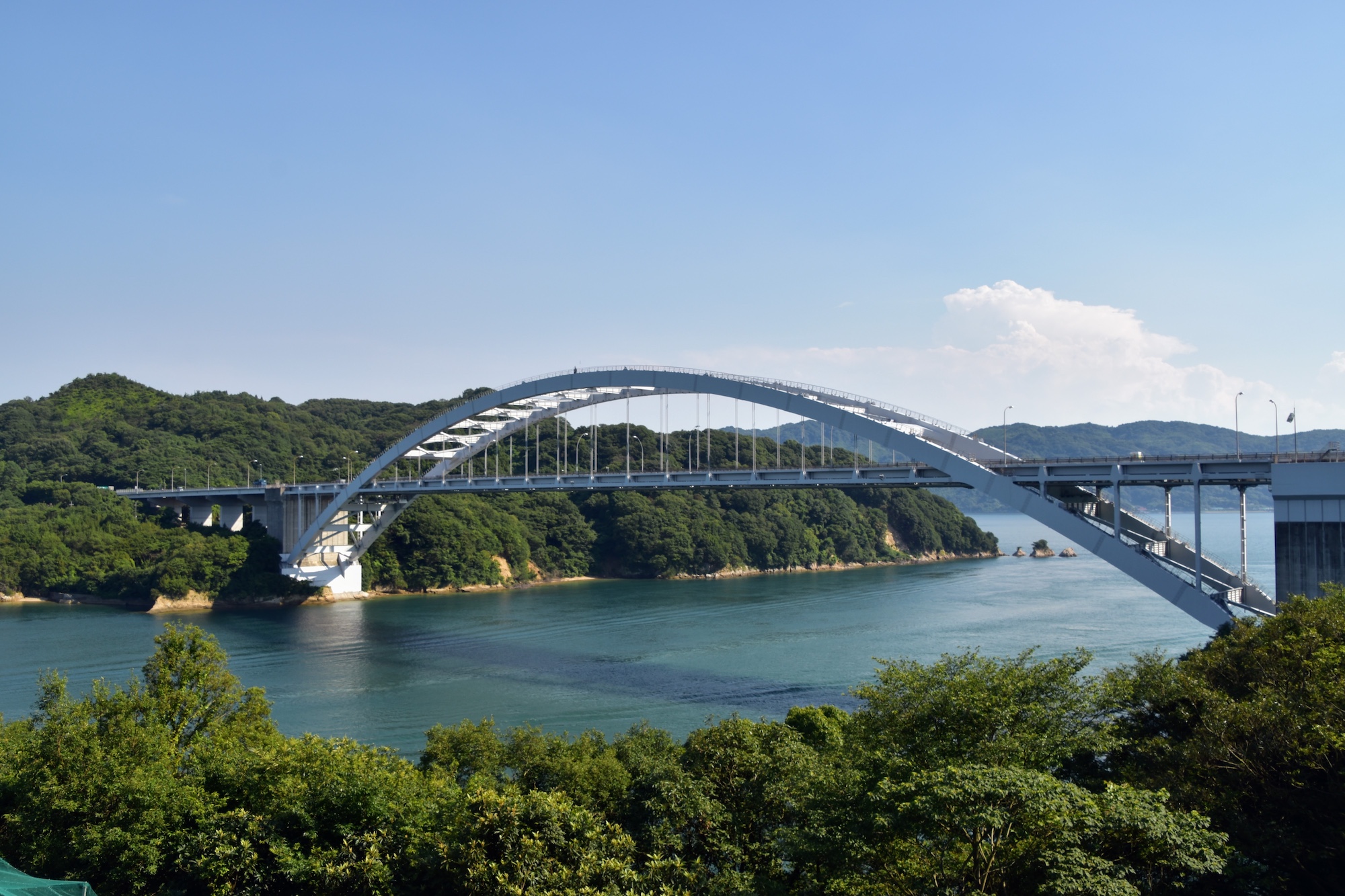
After the grandeur of Tatara Bridge, the Omishima Bridge offers a more intimate crossing between Omishima Island and Hakata Island.
The first of the bridges to be built along what is now the Shimanami Kaido, the Omishima Bridge, was completed in 1979. It is 328 meters long and stands out as the only arch bridge among the Shimanami Kaido crossings.
Rather than towering pylons and cables, Omishima Bridge features a graceful curved arch supporting the roadway. The bridge spans the Hanaguri Strait, an area known for its powerful tidal currents.
The contrast with the larger bridges is striking. Its smaller scale and elegant shape make the crossing feel closer to the water, allowing riders to appreciate the movement of the tides and the beauty of the surrounding islands. Although short, Omishima Bridge has the widest cycle (and pedestrian) lane of all the bridges on the Shimanami Kaido.
Hakata-Oshima Bridge
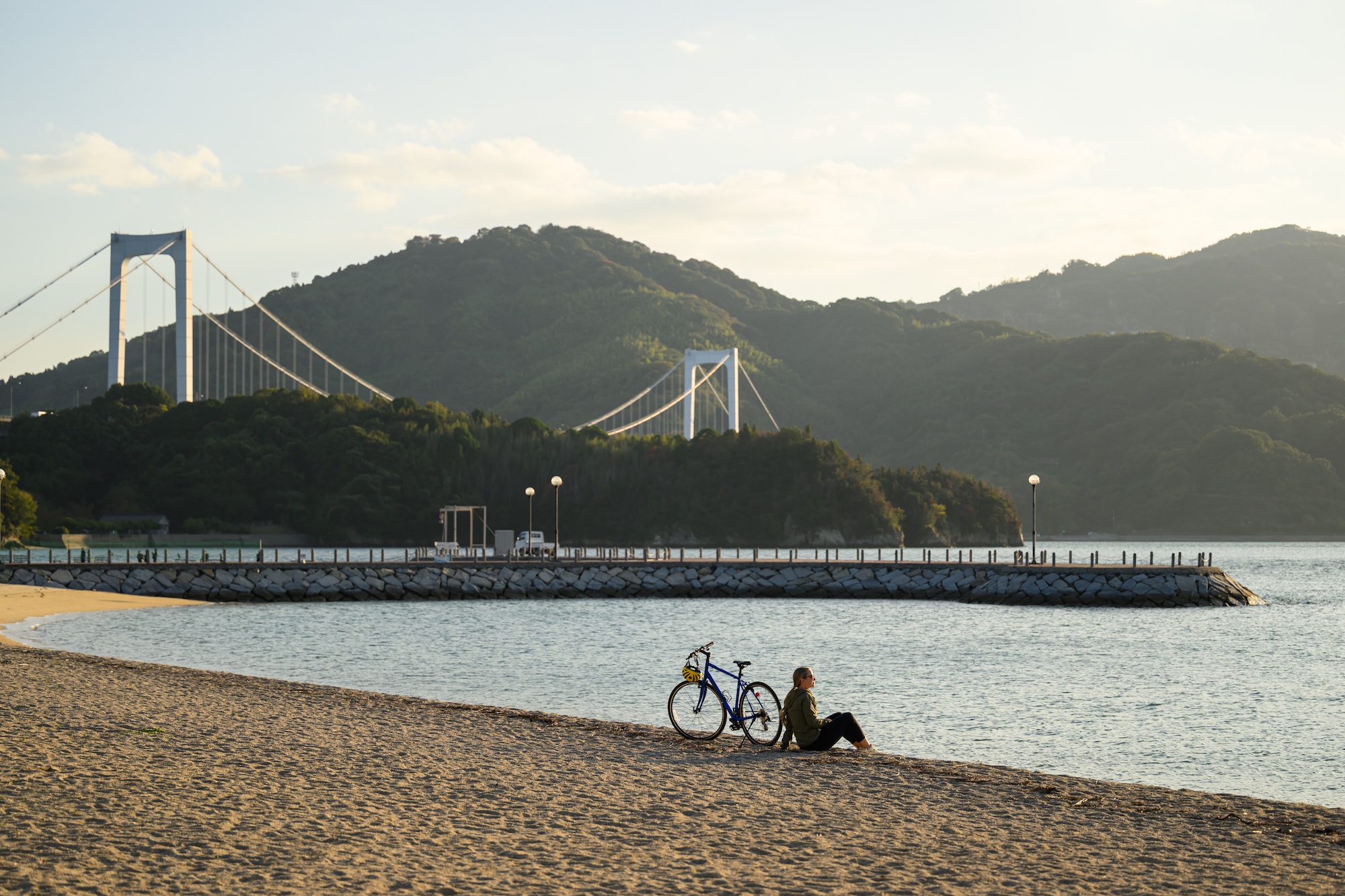
The crossing between Hakata Island and Oshima Island actually consists of two bridges, together known as the Hakata–Oshima Bridge. The first, Hakata Bridge, is a steel box-girder bridge approximately 325 meters long. The second is the Oshima Bridge, a suspension bridge measuring 840 meters.
Together they span waters famous for strong tidal currents. In fact, the Funaori Strait over which the bridge crosses, earned its name from currents and waves said to be fierce enough to actually destroy ships. The waters here were once controlled by the powerful Murakami Kaizoku, a clan of seafaring enforcers who controlled shipping routes in this region.
The uninhabited island of Michikajima, located below the tower on the Hakata Island side of the bridge, was once a garrison for the Murakami Suigun. Today, it is the site of a free campsite, that is only accessible on foot, by bicycle or by moped from along the bridge itself. The campsite overlooks a beach, and there is a viewing area where you can enjoy views of the surrounding islands and appreciate the bridge’s architectural beauty.
Kurushima Kaikyo Bridge
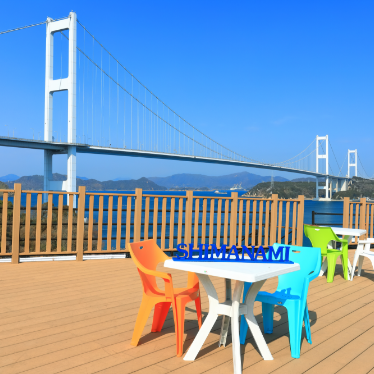
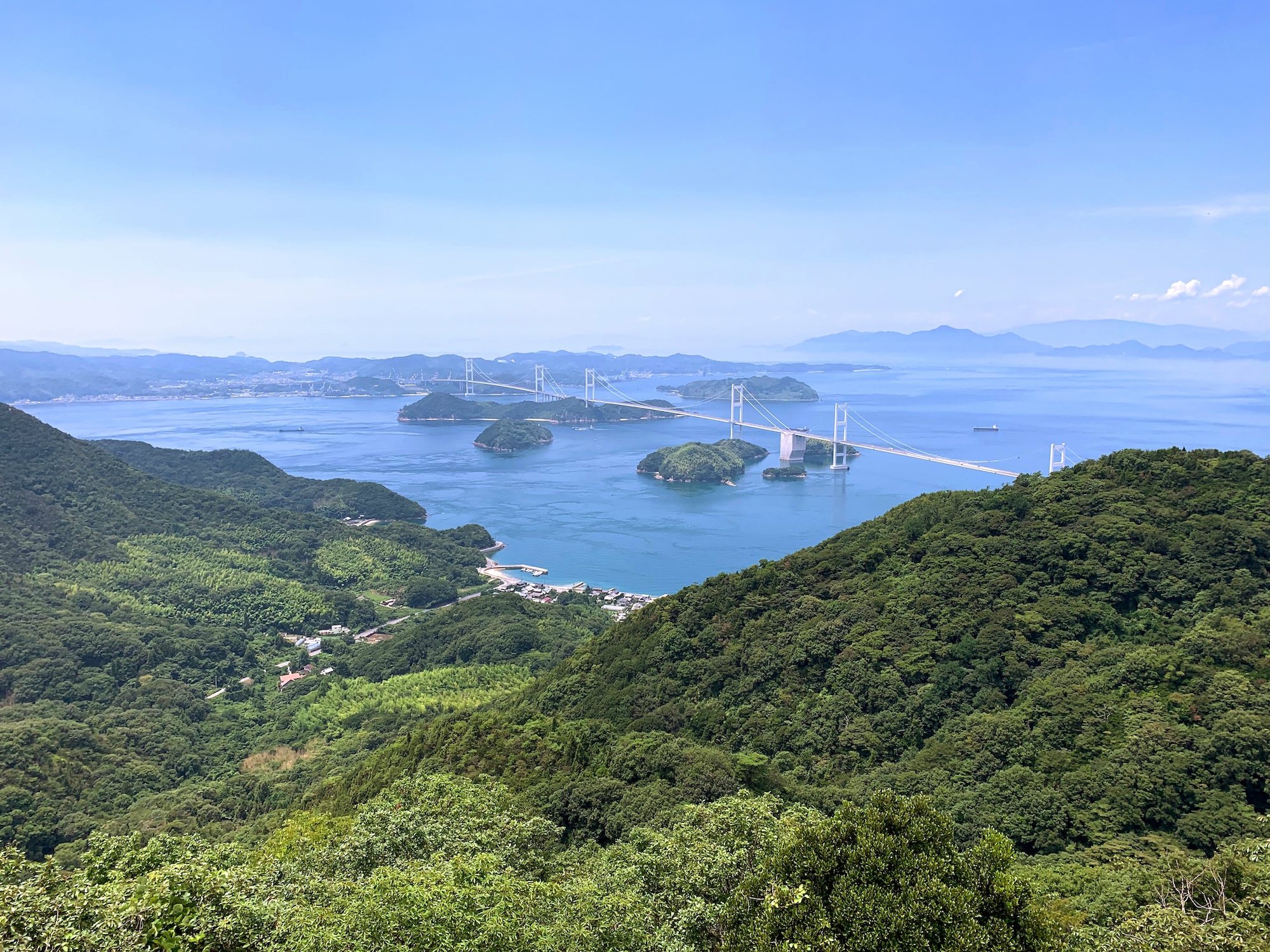
The Kurushima Strait Bridge marks the final stretch of the Shimanami Kaido.
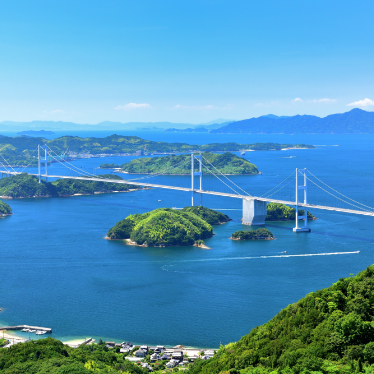
This massive bridge, over 4 km long, connects Oshima Island with Imabari on Shikoku.
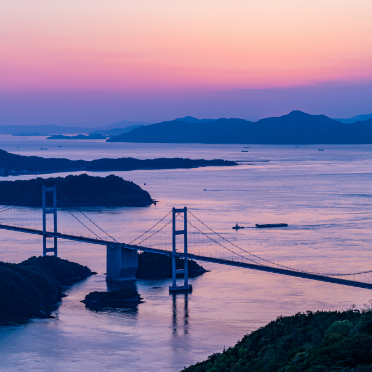
It is not a single bridge, but the world’s first triple-span suspension bridge, consisting of three connected suspension bridges.
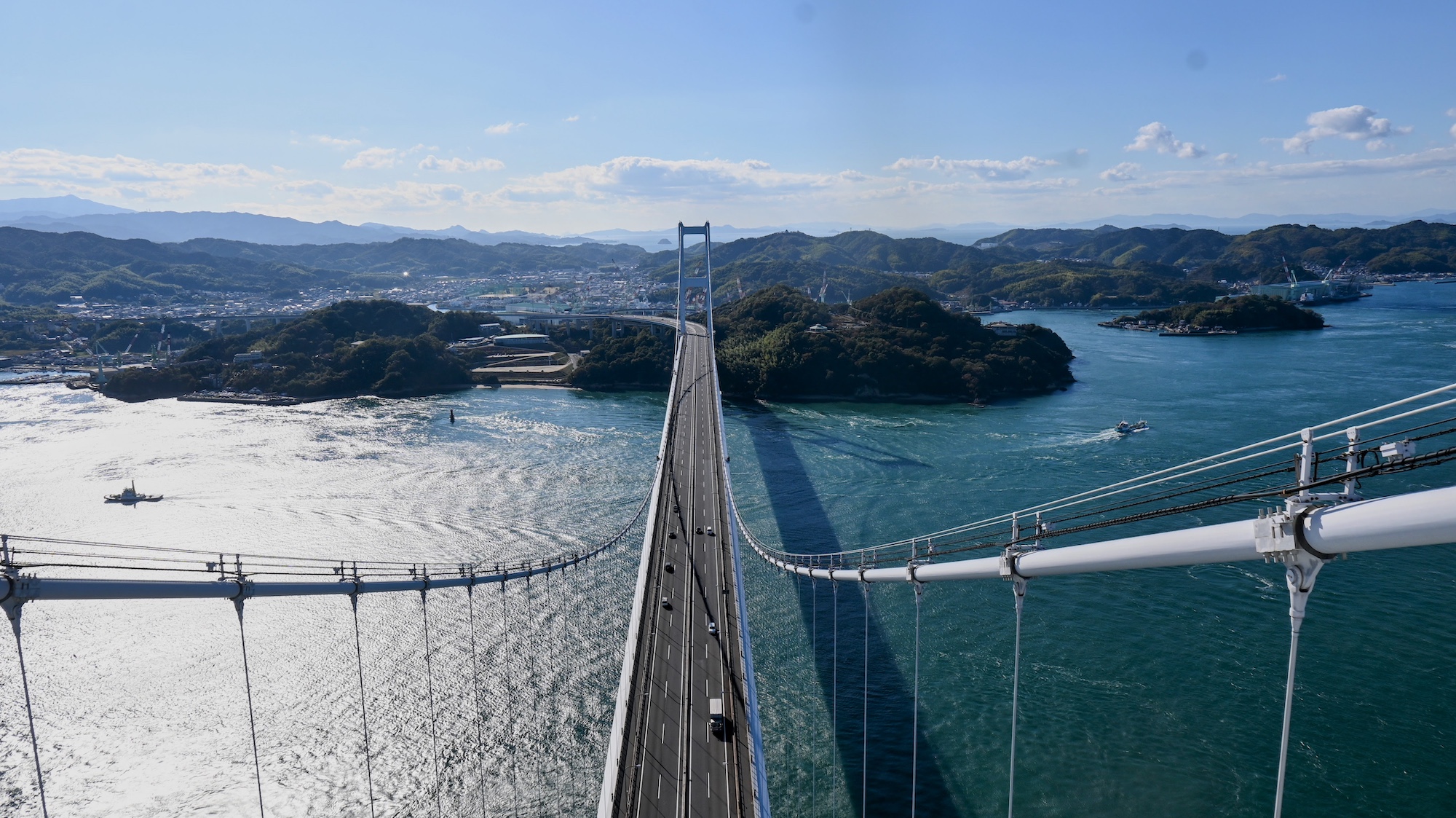
Beneath the bridge lies the Kurushima Strait, one of the busiest waterways in the Seto Inland Sea. It is known for its extremely strong tidal currents, which change direction several times a day.
Crossing this bridge by bicycle is sure to be an unforgettable experience. There is a viewing area along the way where you can watch ships passing through the narrow strait and take in the cityscape of Imabari.
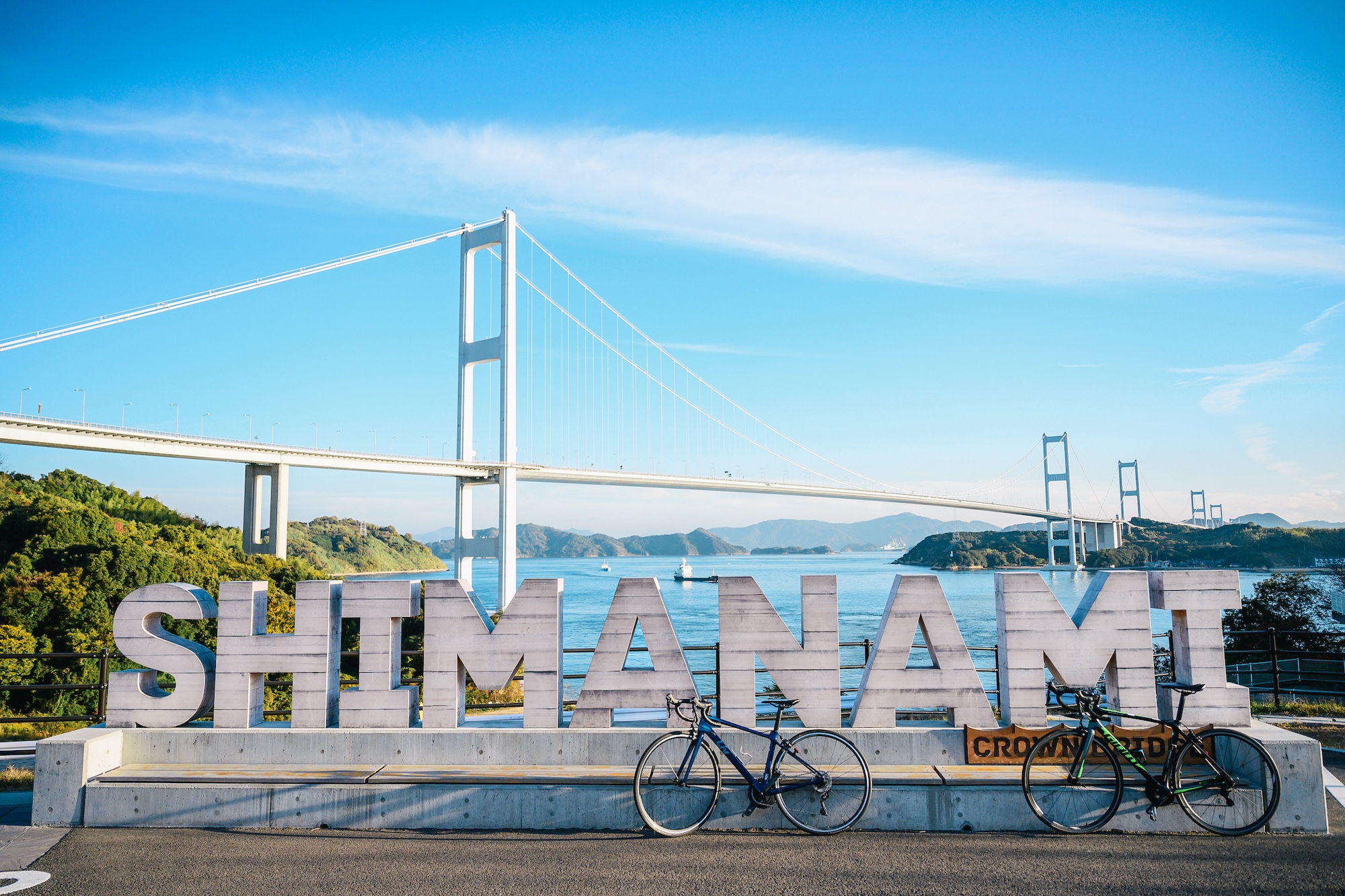
After cycling across the islands and bridges of the Shimanami Kaido, reaching the end of this final span brings a strong sense of accomplishment.
Don’t forget to get a souvenir photo of yourself in front to the SHIMANAMI Crown Birdge sign, next to the Imabari Itoyama Cycle Terminal before you head to the finish line at Imabari Station.
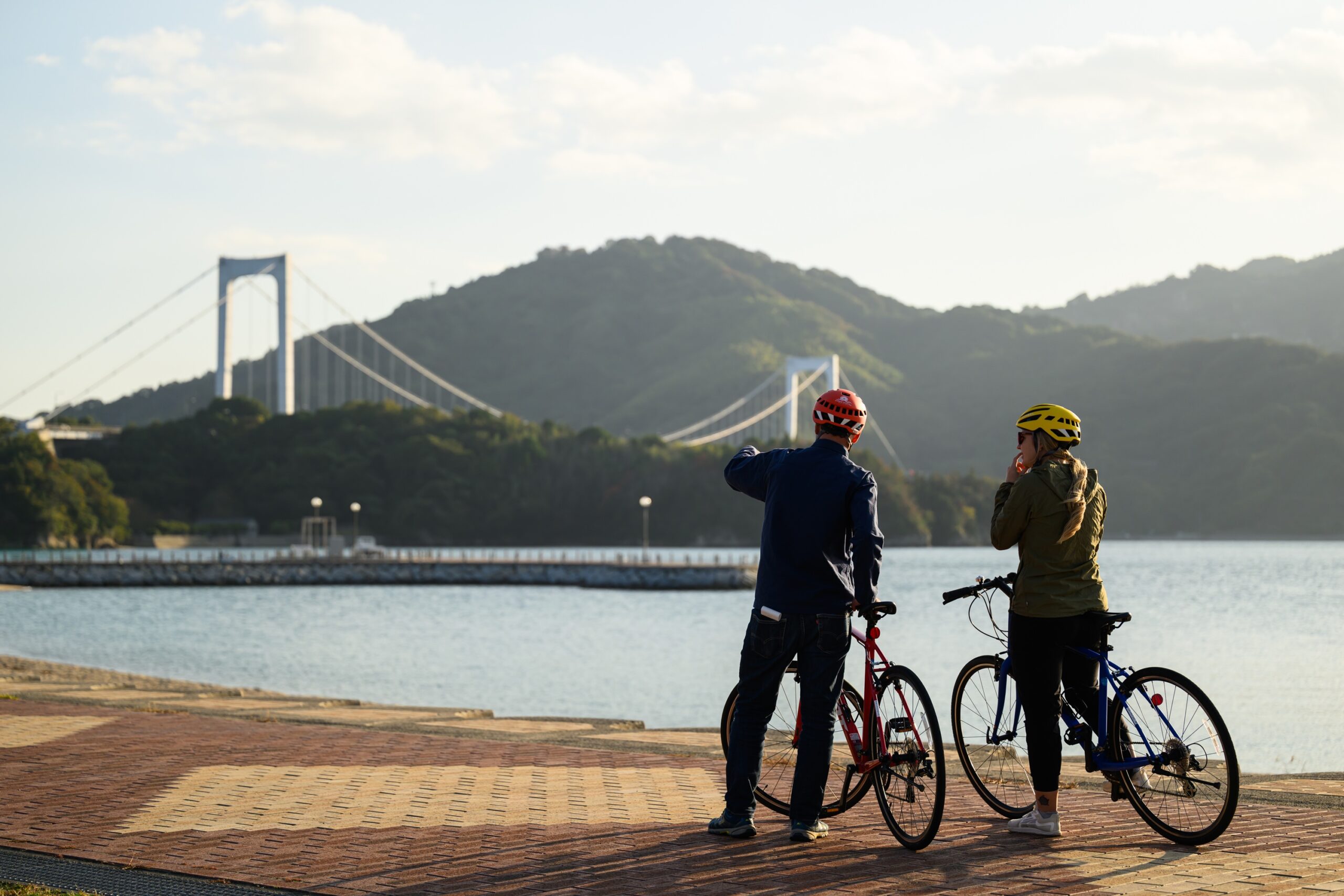
A bridge-hopping journey across the Inland Sea
The bridges of the Shimanami Kaido can be said to be more than just infrastructure. They are a showcase of modern engineering set within one of Japan’s most beautiful coastal landscapes. Each crossing has its own personality, from the enclosed cycling path of the Innoshima Bridge to the soaring elegance of Tatara Bridge and the immense scale of the Kurushima Kaikyo Bridge.
Together, these structures create a one-of-a-kind cycling experience, where travelers can pedal across the sea, island by island, bridge by bridge. The only crossing between the main Japan’s main island of Honshu and Shikoku that is accessible by bicycle, or on foot, the Shimanami Kaido offers not only spectacular scenery but also the rare chance to experience the Seto Inland Sea from the middle of its iconic bridges.